
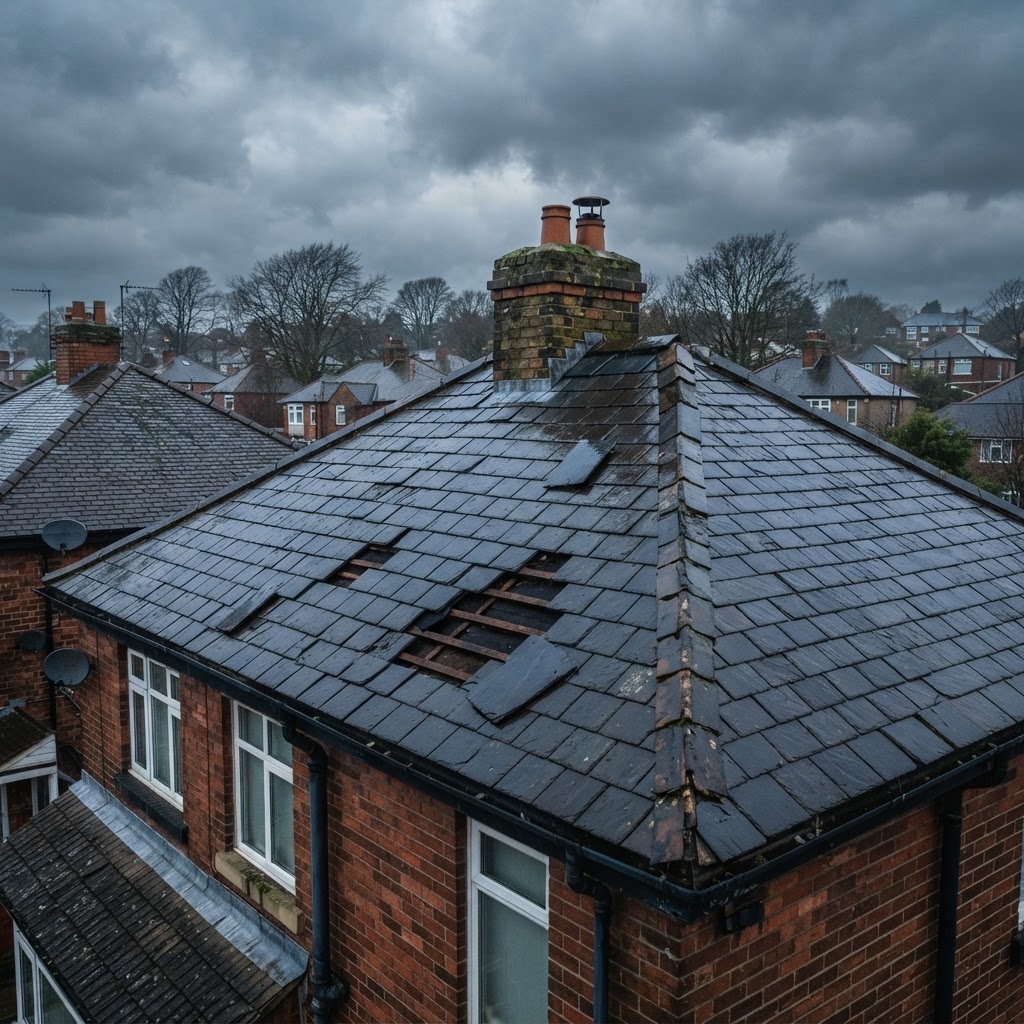
It is 11 PM on a Tuesday in November. Outside, the wind is whipping around the eaves of your semi-detached home, and a persistent, rhythmic tapping has started in the loft. You climb the ladder, torch in hand, and find a damp patch on the insulation. It’s the dreaded sound every homeowner fears during a British winter. You are Sarah, and like many, you are now facing the uncertainty of roof damage during the worst possible weather conditions.
The Reality of Winter Roof Damage
Winter weather in the UK is relentless. High winds, heavy rainfall, and sudden drops in temperature create the perfect storm for roof degradation. When you find yourself in Sarah’s position, it is tempting to wait for a calmer spell, but minor issues often escalate quickly once moisture enters your roof space. If you notice damp patches, light coming through your roof tiles, or debris in your gutters, you must treat these as urgent warning signs.
Identifying Loose and Slipped Tiles
Tiles are the first line of defence for your home. During gales, tiles can become loose, slip out of their bedding, or crack entirely.
- Ground-Level Inspection: Use a pair of binoculars to check your roofline from the pavement. Look for uneven rows or gaps that shouldn’t be there.
- The Loft Check: During daylight, head into the attic with the lights off. If you see daylight piercing through the roof, you have a gap. Even a small hole can allow driving rain to soak your insulation and cause structural timber damage.
- Debris: If you find broken pieces of terracotta or slate in your garden or driveway after a storm, a roof inspection is not optional—it is a necessity.
Checking Flashing and Chimneys
Chimney stacks and the flashing (the lead strips that seal the join between your roof and chimney) are high-risk areas. Thermal expansion and contraction from the cold can weaken old lead seals. If your mortar is crumbling or your lead flashing is pulling away, water will track directly down your chimney breast, often leading to internal plaster damage and damp smells in your bedrooms.
Don’t Ignore Your Gutters
Blocked gutters are a leading cause of roof-related internal leaks. When gutters are filled with autumn leaves and moss, they cannot channel the volume of heavy winter rainfall away from your home. The water pools, backs up under the eaves, and eventually finds its way inside. If you see water cascading over the side of your gutters rather than flowing down the downpipes, they need clearing immediately.
Why Delaying is Costly
Many homeowners hesitate to call a roofer because they worry about the cost or the inconvenience of having work done in the cold. However, the cost of a few slipped tiles or a quick gutter clean is minuscule compared to the damage caused by a ceiling collapse, ruined loft insulation, or rot in the roof timbers. Furthermore, water damage can affect your home insurance premiums and eligibility if the insurer deems you failed to maintain the property.
Immediate Actions to Take
If you have identified a problem, keep these steps in mind:
- Stay Safe: Never attempt to climb onto the roof yourself. The combination of frost, moss, and wet tiles makes it incredibly dangerous for non-professionals.
- Document Everything: Take photos of any internal damp spots or external damage. This is essential for any potential insurance claims.
- Secure the Area: If a slate has fallen, keep children and pets away from the debris zone in the garden.
- Get a Professional: Winter is a busy time for roofers, so do not wait for the next storm to get someone out to assess your property.
How to Get the Right Help
Winter is not the time for DIY experimentation on your roof. You need a tradesperson who is experienced, insured, and familiar with the unique challenges of the British climate. When you contact a professional, be specific about what you saw during your inspection. Mention the damp patches, the age of your property, and any specific areas of concern like the chimney or gutters. Getting a verified, local expert to conduct a winter roof assessment will give you the peace of mind to sleep soundly, regardless of the wind speed outside.