
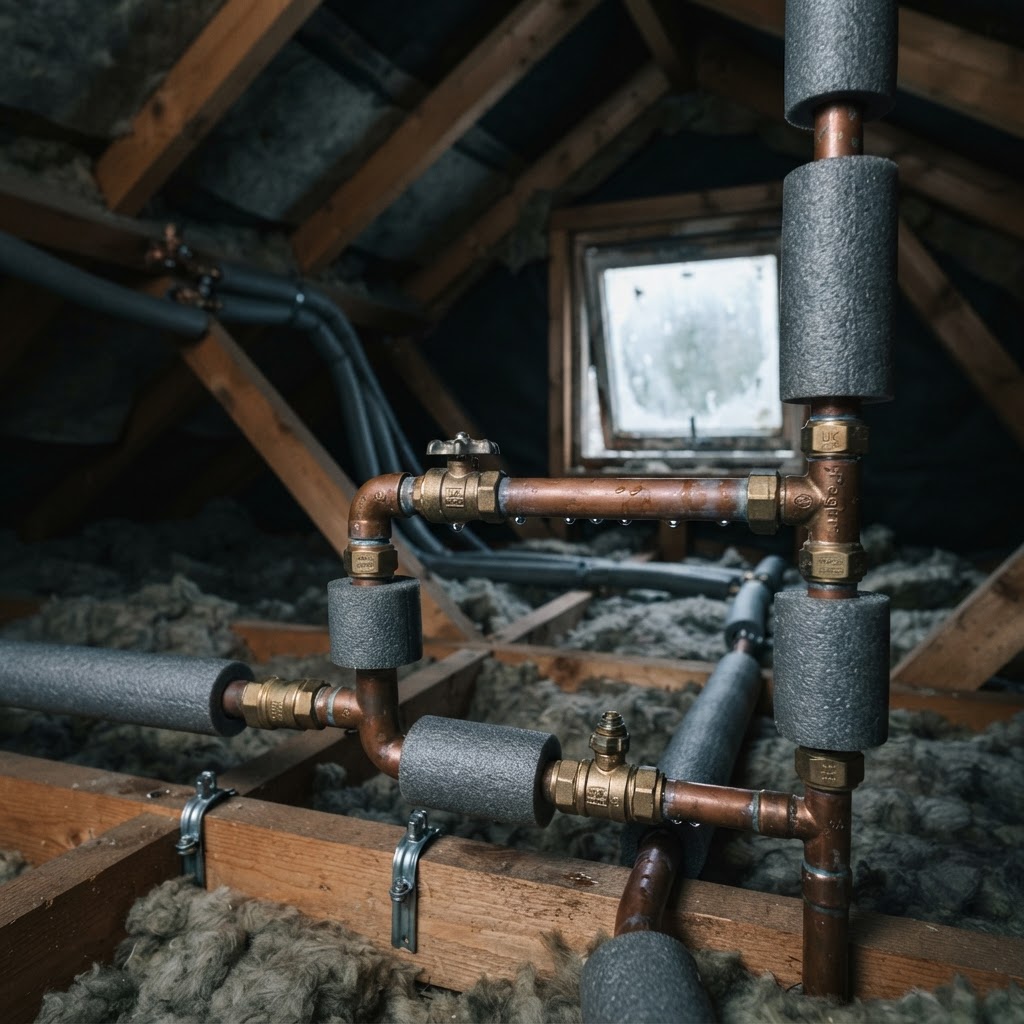
As a UK homeowner, you know the drill: the temperature drops, the heating kicks in, and suddenly you are worrying about your pipework. Freezing weather can cause significant damage to your home, but by following a proactive, logical approach, you can drastically reduce your risk. This practical checklist is designed to help you prepare your home and know exactly how to react if disaster strikes.
Phase 1: Prevention and Preparation
The most effective way to manage winter plumbing is to stop problems before they start. Spend a weekend checking these areas:
- Identify your stop valve: This is the most crucial step. Locate your internal stopcock (usually under the kitchen sink or near the front door) and ensure it is not seized. If you cannot turn it, apply a little lubricant or call a plumber to service it now.
- Lag exposed pipes: Any pipes located in unheated areas such as the loft, garage, or under-floor spaces are at high risk. Purchase foam lagging tubes from your local DIY store and ensure every inch is covered.
- Check your loft tank: If you have a cold water storage tank in your loft, ensure it is properly insulated. Use a purpose-made tank jacket and ensure the loft hatch is also insulated to keep heat from escaping your home.
- Drip tap test: In extremely cold snaps, a very slight drip from a tap can keep water moving, preventing it from freezing. However, only use this as a temporary measure during sub-zero alerts.
- Keep the heating ticking over: If you are heading away for a few days during winter, set your thermostat to a minimum of 12-15°C. This ensures the ambient temperature of your home keeps internal pipes from freezing.
Phase 2: Detecting a Frozen Pipe
If you turn on your taps and nothing comes out, or you hear a strange hissing or banging, a pipe may have frozen. Act quickly by checking these signs:
- Reduced water flow: If your tap is only producing a trickle, there is likely an ice blockage somewhere in your internal pipework.
- Visible frost: Inspect pipes in accessible areas like the garage or utility room. If you see ice on the surface of the metal or plastic, the pipe is frozen.
- Check for cracks: While the water is still frozen, look closely at the pipe joints for signs of bulging or hairline cracks. If you see these, the pipe is likely already damaged and may burst as soon as it thaws.
Phase 3: Immediate Actions for Frozen or Burst Pipes
If you confirm a pipe is frozen or has burst, speed is of the essence to mitigate water damage to your property.
- Turn off the water: Immediately close your internal stopcock. If the leak is severe, you may also need to turn off your central heating system to prevent further pressure on the system.
- Open the taps: Open all your cold taps to help drain the system as the water thaws, which reduces the internal pressure.
- Thaw gently: If a pipe is frozen but not yet burst, use a hot water bottle or a hairdryer on a low setting to slowly warm the area. Never use an open flame or high-heat blowtorch, as this can cause the pipe to rupture or, worse, start a fire.
- Contain the leak: If a pipe has already burst, place a bucket or bowl under the leak. Clear any valuables from the area and soak up standing water to protect your flooring and electrical fittings.
- Turn off the electrics: If water is leaking near electrical appliances, plug sockets, or light fittings, turn off the mains power at your fuse box immediately.
When to Call a Professional
Not every plumbing issue is a DIY job. You should call an emergency plumber if:
- You cannot locate or turn off your stopcock.
- The pipe has burst and water is flooding your home uncontrollably.
- You notice signs of water leaking through light fixtures or ceilings, which indicates a serious structural breach.
- You have tried to thaw the pipe for over an hour with no success.
- You need to drain down the entire central heating system, as this requires specific knowledge to avoid airlocks and boiler damage.
Always ensure that any tradesperson you call is reputable and insured. While you might be tempted to call the first person you find, using a verified platform ensures you are getting someone who meets high professional standards.
Don't Wait for the Frost
The best time to prepare for a plumbing emergency is while the weather is still mild. Take an hour this weekend to locate your stop valve, check your lagging, and ensure you have the contact details of a local, trusted plumber to hand. Being prepared is the best insurance against a cold, wet, and expensive winter.