
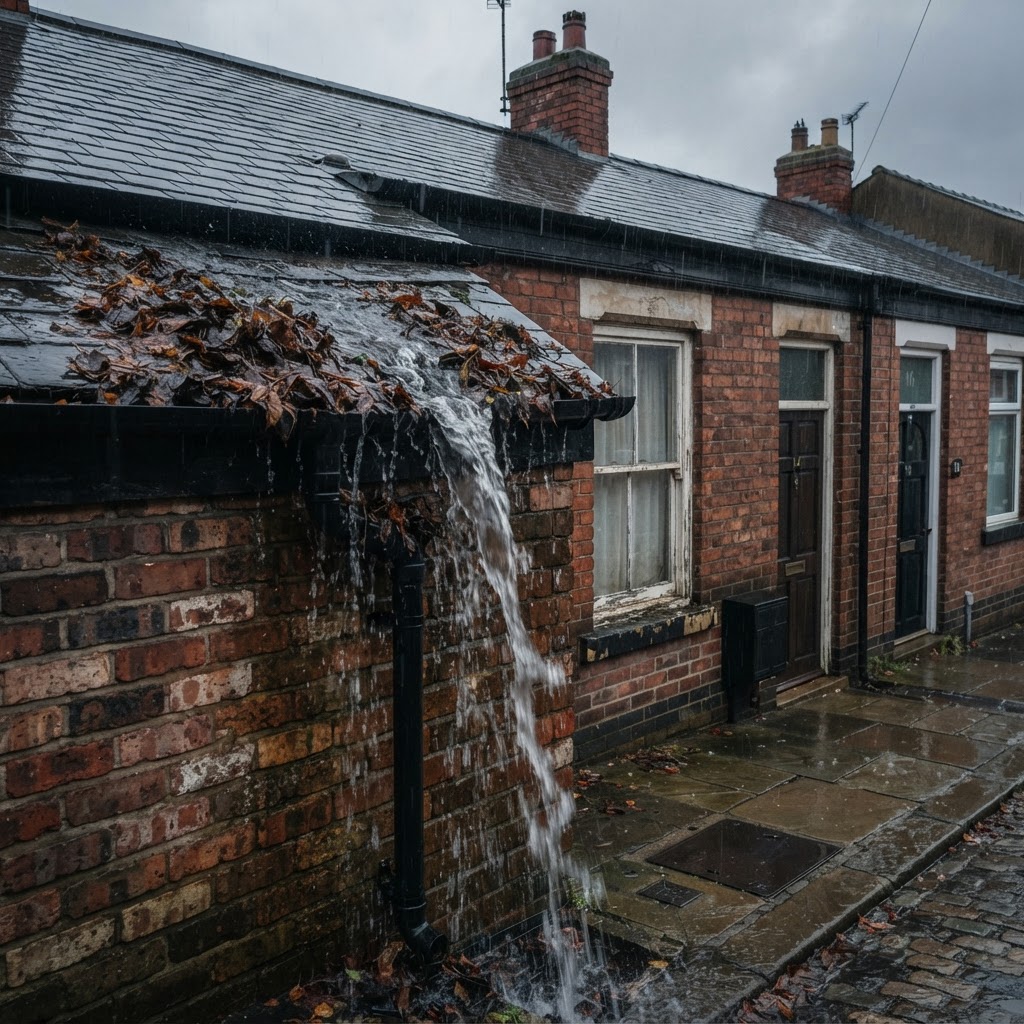
As the nights draw in and the UK weather turns wetter and colder, the health of your home’s drainage system becomes critical. Neglected gutters and drains are the primary culprits behind seasonal flooding, internal damp, and expensive structural repairs. Water that cannot drain away effectively will find the path of least resistance—often into your brickwork, foundations, or roof space. By performing these essential checks now, you can mitigate the risk of winter-related damage before the worst of the storms arrive. This guide offers a practical, step-by-step approach to preparing your home’s exterior for the challenges of winter.
External Roof and Guttering Checks
Your roofline is the first line of defence against the elements. If water overflows from your gutters, it can splash back onto your walls, causing unsightly staining or penetrating damp.
- Clear out debris: Remove moss, leaves, and twigs from gutters by hand or with a plastic scoop. Ensure you use a stable, appropriately positioned ladder or seek professional help if working at height makes you uncomfortable.
- Flush for flow: Once clear, use a hose pipe to run water through the guttering. Check that the flow is directed towards the downpipe and that there are no leaks at the joints.
- Tighten brackets: Check that your guttering is firmly secured to the fascia boards. Sagging gutters can create ‘pools’ of standing water, which may freeze and cause the plastic to crack or the brackets to snap.
- Inspect downpipes: Ensure the bottom of the downpipe is clear. If it feeds into a drain, check that the drain is not covered in debris, preventing water from escaping into the underground pipework.
Ground-Level Drain and Surface Water Checks
Surface water flooding often occurs when drains are blocked or overwhelmed by heavy rainfall. Keeping your ground-level drainage clear is essential to protecting your property’s foundations.
- Clear gully traps: These are the small, grated drains located around the perimeter of your home. Lift the grids and clear out any silt, leaves, or stones that have accumulated in the trap.
- Check patio and driveway drains: If you have channel drains (the metal grills set into concrete), ensure they are free from garden debris. If these are blocked, water will pool against your doors, increasing the risk of water ingress.
- Test for blockages: Pour a bucket of water down each drain. If the water drains away slowly, there is likely a partial blockage that needs to be cleared with a drain rod or professional pressure jetting.
- Protect your exterior: If you have a basement or low-level air bricks, ensure the surrounding ground slopes away from the house. If you notice pooling near the walls, consider installing a gravel-filled French drain to divert water safely away.
Winter-Specific Hazards
Even a well-maintained system can struggle when temperatures drop below freezing. Ice causes unique problems for drainage pipes.
- Avoid pipe freezing: If you have exterior pipes exposed to the elements, ensure they are properly lagged with foam insulation. While this is critical for plumbing, it also prevents structural damage if a pipe bursts near a drain.
- Monitor freezing gutters: During a thaw, ice trapped in gutters can become heavy. If you notice large icicles forming or the gutters bowing, it is a sign of a blockage preventing water from escaping. Address this immediately.
- Clear snow quickly: If heavy snow accumulates on your roof, keep an eye on your drains as it melts. A rapid thaw can overwhelm even the best-maintained drainage systems.
When to Call a Professional
While many tasks are well within the remit of a DIY enthusiast, there are times when calling in a specialist is the safest and most cost-effective option:
- Persistent blockages: If you have tried rodding a drain and it remains blocked, you may have a collapsed pipe or an issue deep within the underground system that requires a CCTV drainage survey.
- Structural issues: If you notice signs of subsidence, large cracks in your foundations, or damp patches appearing on internal walls following rain, do not wait. A drainage specialist can perform a site assessment to see if water is being diverted incorrectly.
- Height safety: Never attempt to clean guttering from a ladder if you are not experienced in working at height or if the ladder cannot be securely footed on level ground.
- Major repair: If you identify split pipes, rusted brackets, or damaged drainage chambers, a professional will have the tools and materials to ensure a durable, watertight repair.
Take Action Before the Storms
Preventative maintenance is significantly cheaper and less stressful than reacting to an emergency flooding incident. Spending a few hours on a weekend to clear your gutters and gully traps can save you thousands of pounds in potential repair bills and the disruption of drying out a water-damaged home. Assess your property this week, gather the necessary tools, and if you find something that looks beyond your capabilities, contact a qualified tradesperson to handle it before the weather turns.