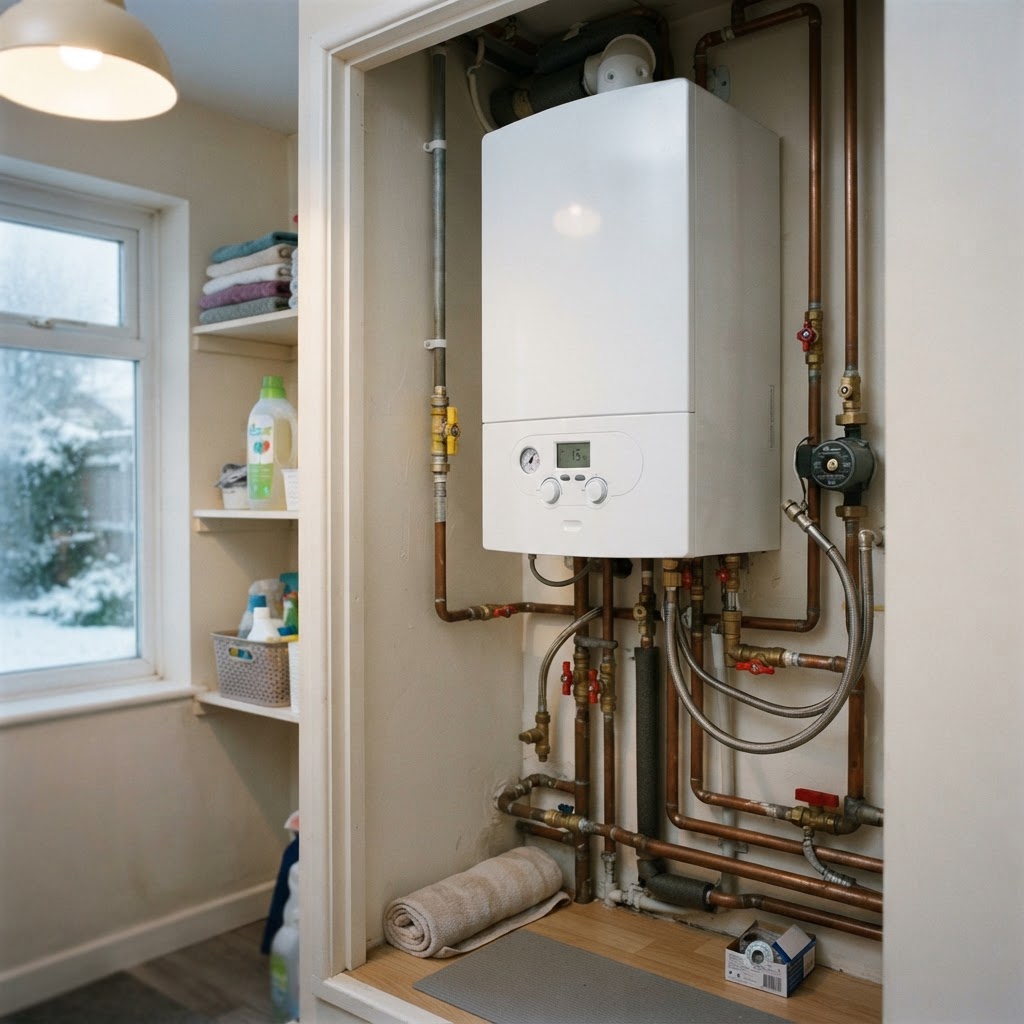
Winter in the UK can be unforgiving, and there is nothing worse than waking up to a freezing house and no hot water. While a total heating failure often feels like a catastrophe, many common boiler issues can be safely troubleshot before you need to pick up the phone for emergency help. This practical checklist is designed to help you methodically identify common faults and determine if you can fix them or if it is time to call a professional. Before you start, remember: if you smell gas or suspect a leak, leave the property immediately, turn off your gas supply at the main meter, and call the National Gas Emergency Service. ## Phase 1: The Basics (Check These First) Sometimes the problem is simpler than it seems. Before opening up any panels, check these fundamentals: * The Power Supply: Check that your boiler is switched on at the fused spur and that the relevant circuit breaker in your fuse box hasn't tripped. * The Thermostat: Ensure your room thermostat or smart controller is set to a temperature higher than the current room temperature. Check that the batteries in your wireless controller haven't died. * The Timer/Programmer: Check that your boiler timer is set to 'On' and that it matches the current time of day. Sometimes a power cut can reset these devices. ## Phase 2: Checking Boiler Pressure If your boiler has a digital display, check for an error code. Often, this will relate to low pressure. A healthy boiler pressure gauge should typically sit between 1.0 and 1.5 bar. * If the pressure is below 1.0 bar: You may need to 're-pressurise' your system. Locate your filling loop (usually a silver braided hose under the boiler) and follow your boiler manual's instructions to bring the pressure back to the green zone. * If the pressure is too high (above 2.0 bar): You might need to bleed a radiator to release some air and water until the pressure drops. If it drops frequently, you have a leak that needs professional repair. ## Phase 3: The Frozen Condensate Pipe This is the number one cause of boiler breakdowns during cold snaps. Modern condensing boilers produce a waste liquid called condensate, which travels through a plastic pipe to an outside drain. In freezing temperatures, the water in this pipe can freeze, causing a blockage that makes the boiler lock out. * How to spot it: You might hear a gurgling sound from the boiler or see a specific 'frozen pipe' error code. * How to fix it: Carefully pour warm (not boiling) water over the external pipe to thaw the blockage. Do not use boiling water, as this can crack the plastic pipe. Once thawed, reset the boiler. ## Phase 4: Ignition and Pilot Light For older boilers, the pilot light may have extinguished. * Check the ignition: If you have an older manual model, follow the instructions printed on the boiler casing to relight it. * Modern boilers: Most modern units have automatic electronic ignition. If the boiler attempts to fire up but fails (usually indicated by a clicking sound), it could be an issue with the gas supply or the ignition electrode. Do not attempt to dismantle the boiler to inspect internal components. ## When to Call a Gas Safe Engineer If you have run through this checklist and the boiler still fails to function, or if you encounter any of the following, stop immediately and contact a professional: * You smell gas or hear hissing. * You see signs of soot or black stains around the boiler. * The pilot light keeps going out repeatedly. * You need to top up the pressure more than once a month. * The boiler makes loud banging or 'kettling' noises. * You are not confident or comfortable carrying out any of the checks above. Never attempt to remove the casing of your boiler. By law, any work involving the gas supply, combustion, or internal safety components must be performed by a Gas Safe registered engineer. They have the training and tools to diagnose complex electronic faults, pump failures, and fan issues safely. ## Don't Spend Another Night in the Cold If your boiler remains unresponsive, professional help is the only way to get your heat back on quickly and safely. Using a verified, experienced engineer ensures the repair is carried out to current UK safety standards. Post Your Heating Job Free & Get Quotes →
Back to BlogHeating Engineer
Boiler Breakdown Checklist: A UK Homeowner’s Emergency Guide
13 October 2026· By Compare My Builder