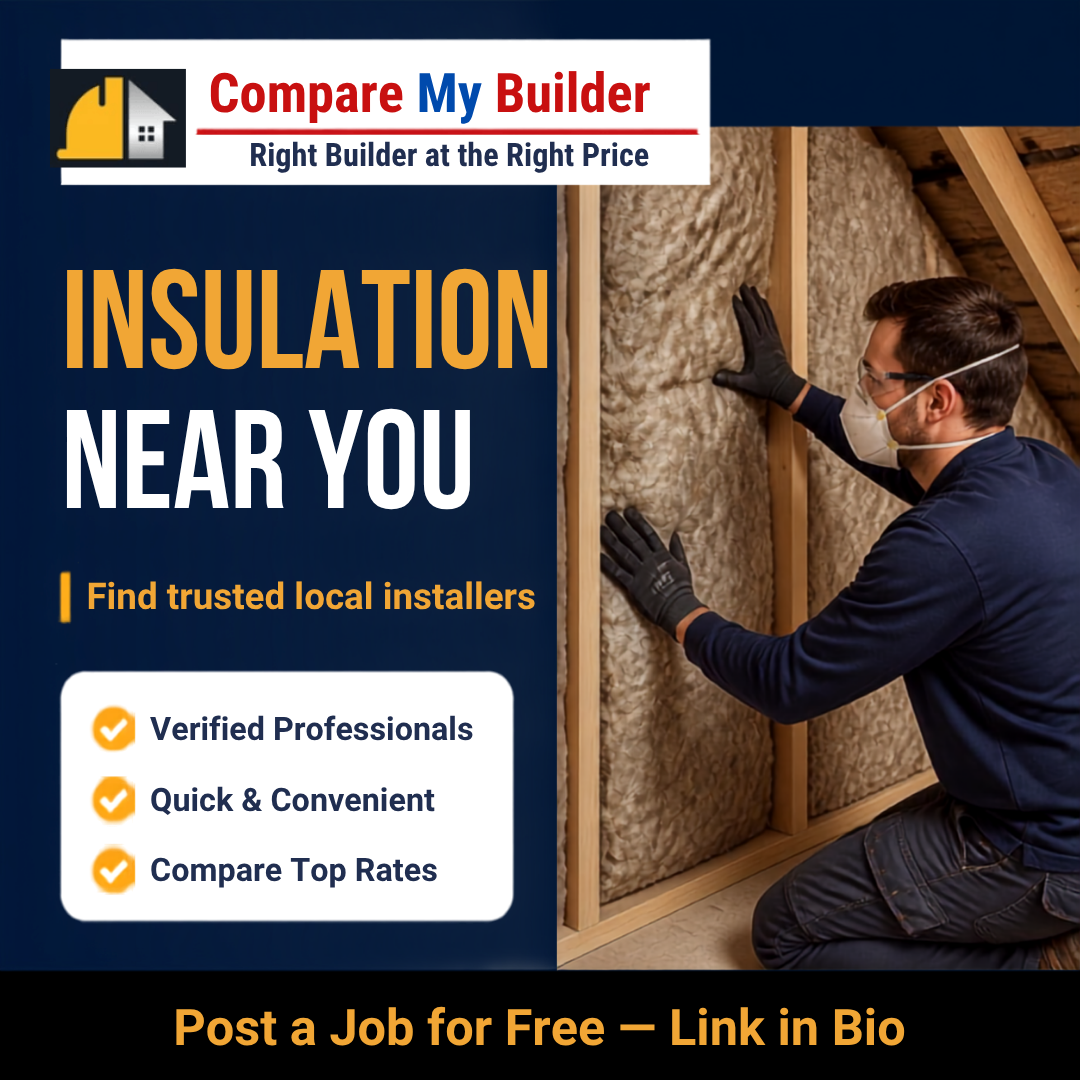
Insulation is the single most cost-effective home improvement you can make — it pays for itself in energy savings faster than almost anything else. Here's what to know about the main types, what they cost, and what to prioritise.
Loft Insulation
The cheapest and most effective insulation upgrade. If your loft has less than 270mm of insulation, topping it up is the highest-priority job.
- Typical cost: £300–£600 (for a typical 3-bed semi, DIY possible but professional installation is affordable)
- Annual saving: £150–£300 per year
- Payback period: 1–3 years
- Recommended depth: 270mm–300mm
Cavity Wall Insulation
If your home was built after 1920, it likely has cavity walls (two layers of brick with a gap between). Filling that gap with insulation is one of the best-value upgrades.
- Typical cost: £500–£1,000 (for a typical 3-bed semi)
- Annual saving: £150–£250 per year
- Payback period: 2–5 years
- Not suitable for: homes with signs of damp in the walls (insulation can trap moisture) or properties in very exposed, windy locations
Solid Wall Insulation
If your home was built before 1920, it likely has solid walls (no cavity). Insulating solid walls is far more expensive — either internally (insulated plasterboard on the inside) or externally (insulation boards fixed to the outside, then rendered).
| Type | Typical Cost (3-bed semi) | Annual Saving |
|---|---|---|
| Internal wall insulation | £5,000–£12,000 | £250–£400 |
| External wall insulation | £8,000–£18,000 | £250–£400 |
Internal insulation reduces room size slightly and requires removing and refitting skirting, radiators, and sockets. External insulation changes the appearance of the house and may need planning permission in conservation areas.
Floor Insulation
Suspended timber floors (common in pre-1940s homes) can lose significant heat through the floorboards. Insulating between the joists from below (if you have access) or from above (lifting the floorboards) reduces draughts and heat loss.
- Typical cost: £500–£2,000 per room (depending on access)
- Annual saving: £50–£100 per year
What to Prioritise
- Loft insulation — cheapest, fastest payback, do this first
- Cavity wall insulation — if suitable for your property, excellent value
- Draught-proofing — cheap and effective (doors, windows, letterboxes, loft hatches)
- Hot water cylinder jacket — if you have a hot water cylinder, a £20 jacket saves £30–£50/year
- Solid wall insulation — expensive, only worth it as part of a major renovation
- Floor insulation — worth doing if you're already lifting floors for other work
Grants and Funding
The UK government and energy companies offer various insulation grants, particularly for low-income households and those in less energy-efficient homes. Check current schemes (they change regularly) before paying full price — you may be eligible for free or heavily subsidised insulation.
Always Use a Qualified Installer
For cavity wall insulation, use a CIGA-registered installer (the guarantee lasts 25 years). For loft and wall insulation, look for a National Insulation Association (NIA) registered installer.